
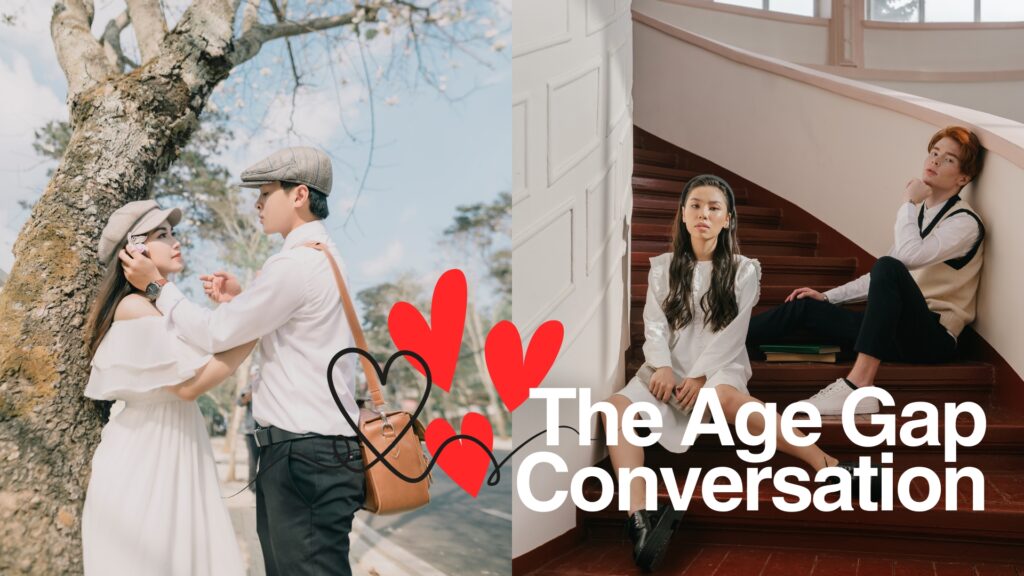
❤️ When Love Crosses Generations
Love has never been defined by age, yet society often seems uncomfortable when two people in love are separated by a significant age gap.
Whether it’s an older woman with a younger man or a man decades older than his partner, age-gap relationships continue to stir conversations, judgments, and curiosity.
But beyond public opinion lies a simple truth: love doesn’t consult a birth certificate before it happens.
The question is — can such relationships truly thrive in the real world, where perception and maturity often clash?
👀 1. Society’s Lens: The Stigma Around Age Differences
Let’s be honest — the world still judges what it doesn’t understand.
When people see couples with a noticeable age gap, assumptions quickly follow:
“She must be after his money.”
“He’s just with her for her looks.”
“They can’t possibly have much in common.”
These stereotypes stem from societal conditioning rather than truth.
In reality, many age-gap couples share deep emotional connections, mutual respect, and aligned values. What sustains them isn’t age — it’s understanding, compatibility, and shared vision.
🧠 2. Maturity vs. Age: The Real Measure of Compatibility
Age doesn’t always equal maturity.
A 25-year-old might handle conflicts more wisely than someone in their 40s, while a 45-year-old could bring emotional stability that a younger partner needs.
True compatibility depends on:
- Emotional maturity — How well both partners handle differences and challenges.
- Communication — The ability to discuss sensitive topics openly.
- Shared goals — A vision for life that aligns, regardless of age.
When these three are present, love becomes ageless.
🗣️ 3. Communication: The Bridge Between Generations
In age-gap relationships, communication becomes even more crucial.
Partners may come from different cultural eras — different music, slang, and even life priorities.
To bridge this, both must:
- Be open-minded and willing to learn from each other.
- Respect each other’s perspectives.
- Avoid patronizing or “parenting” behaviors.
When conversations are rooted in curiosity rather than judgment, age becomes just a number — not a barrier.
💬 4. Dealing with Public Opinion and Family Pressure
One of the toughest parts of age-gap love isn’t internal — it’s external.
Families, friends, and even strangers might question your intentions or criticize the relationship.
Here’s how to handle it:
- Stand united — Discuss how to respond to negativity as a team.
- Set boundaries — Not everyone deserves an explanation.
- Focus on your peace — You owe your happiness to yourselves, not public approval.
Eventually, consistent love and respect between partners silence the loudest critics.
🌱 5. How to Make Age-Gap Relationships Thrive
If you’re in (or considering) an age-gap relationship, success depends on intentional effort.
Here’s what helps such relationships flourish:
✅ Mutual respect — Treat each other as equals, regardless of age or experience.
✅ Shared interests — Find activities and passions that bring you together.
✅ Patience and understanding — Differences will appear; face them with grace.
✅ Confidence — Be proud of your love, not defensive about it.
Remember, age-gap love works best when both people bring emotional balance and self-assurance to the table.
💖 6. When Love Is Genuine, Age Becomes Invisible
The most powerful relationships aren’t built on external approval but inner peace.
When love is genuine, both partners grow — emotionally, spiritually, and intellectually — regardless of what society thinks.
Age-gap couples often prove that real love transcends age, culture, and stereotypes.
It’s not about finding someone your age; it’s about finding someone who’s on your wavelength.
🌟 Conclusion: Love Beyond Numbers
So, can true love defy numbers? Absolutely.
While age-gap relationships may face unique challenges, they also carry unique strengths — depth, perspective, and emotional maturity.
When both partners communicate, respect differences, and support each other’s growth, love not only survives — it thrives beyond time and opinion.
Because in the end, love doesn’t ask “How old are you?” — it asks “Can I trust you to walk beside me through life?”